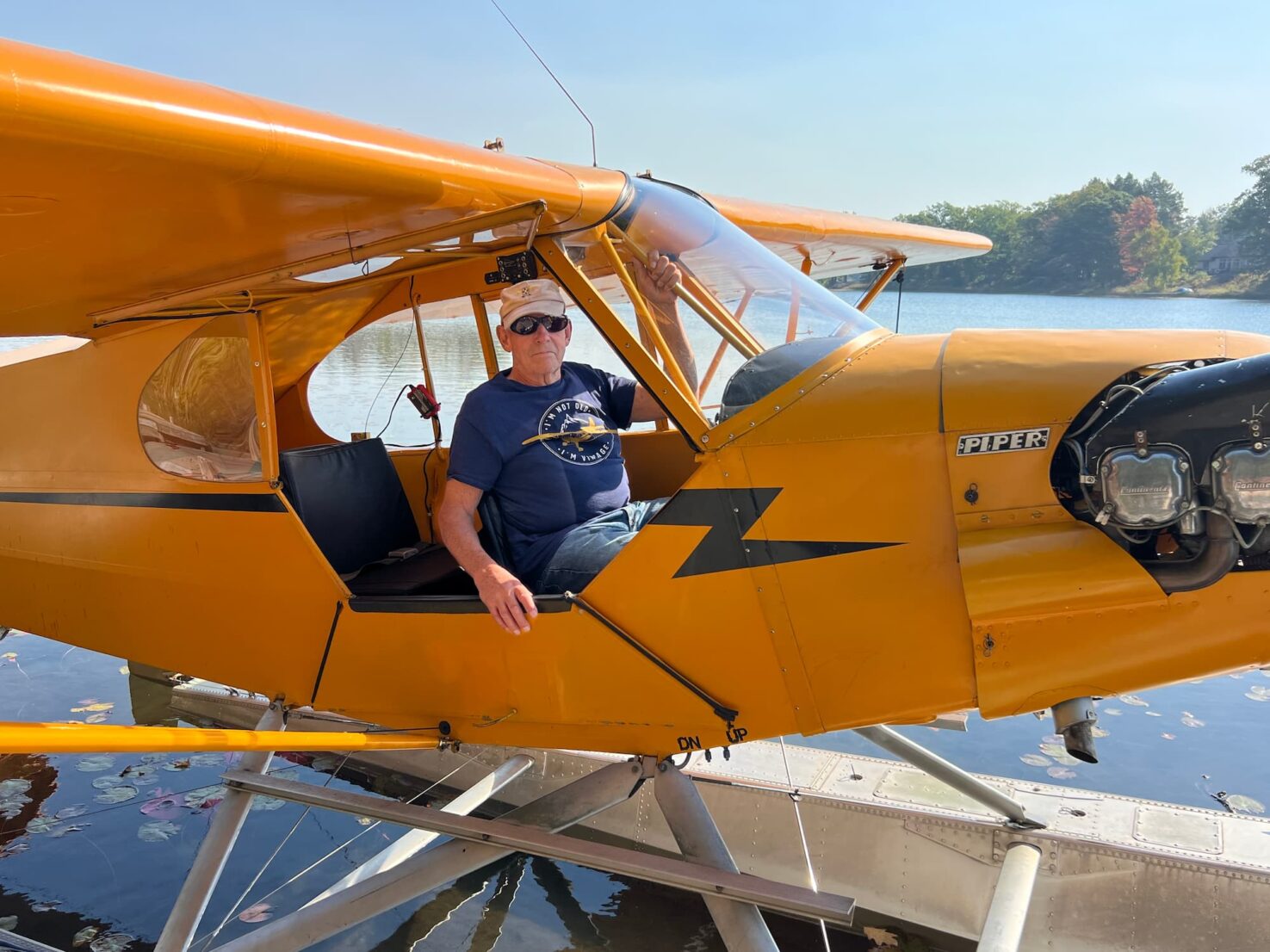
A Note From the Piper Team
Piper J-3 Cubs are the reason a lot of people ended up in aviation. Our President and Chief Executive Officer, John Calcagno, is one of them: this particular Cub inspired him as a kid, and the same airplane inspired his son after him. Two generations, one Cub.
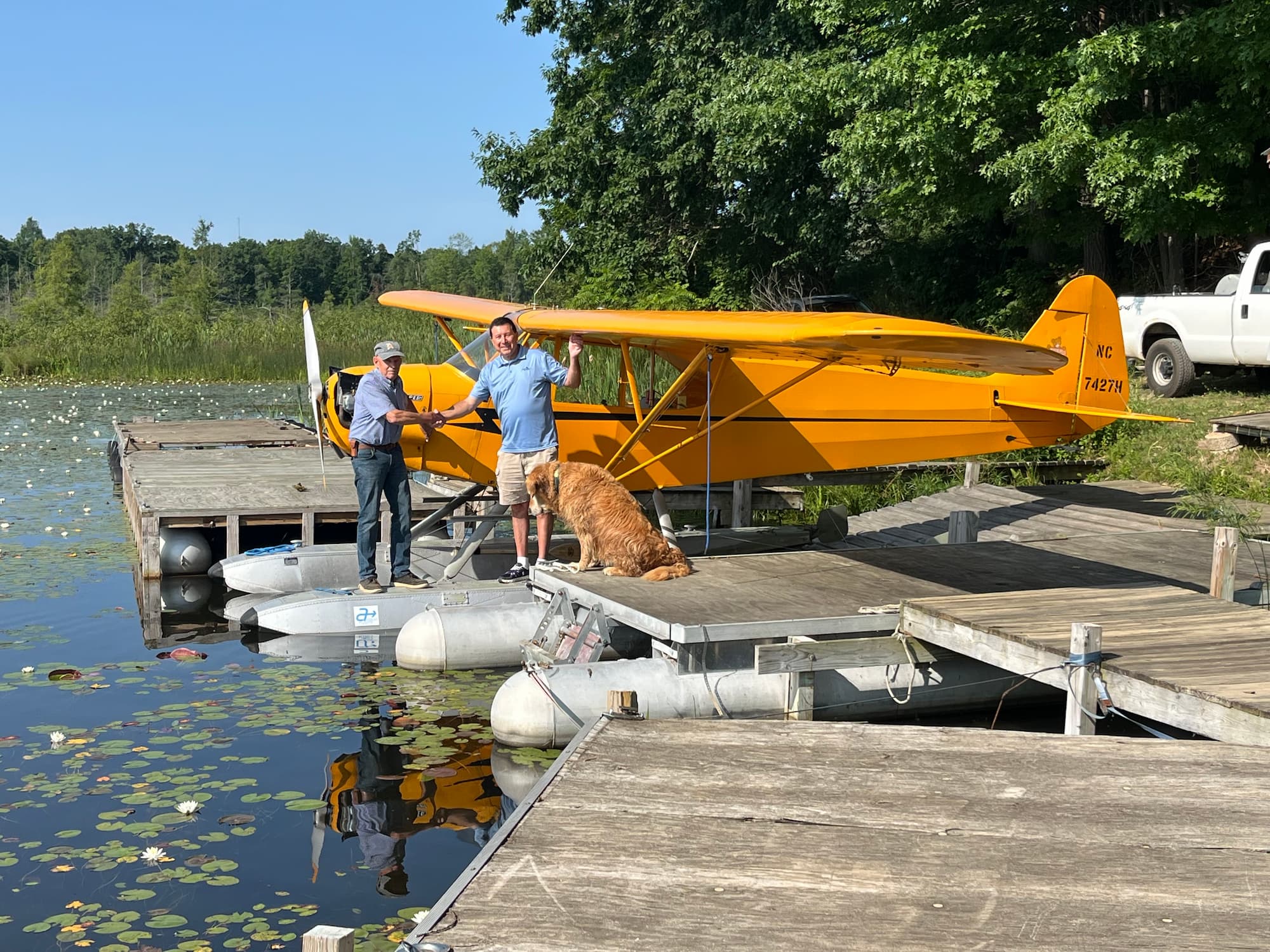
He’s in good company. The J-3 arrived in 1937 and became the airplane America learned to fly in. It was the Civilian Pilot Training Program’s primary trainer, and 75% of everyone who came through that program learned on a Cub. At the J-3’s peak, Piper was building a new one every 10 minutes. Of the 19,888 originally built, more than 5,000 are still on the FAA registry.
NC7427H is one of the Cubs still flying today. Its owner, Don DeRuiter, lets it tell its own story.
A Piper J-3 Cub’s Journey
Hello! My name is NC7427H, and I’m the genuine, pedigreed Piper J-3 Cub you may have spotted at the Wexford County airport in Cadillac, Michigan during the winter months. In the summer, I retreat to the lake for some well-earned fun on floats. It was suggested that you pilots might appreciate my story, so here it goes — straight from the propeller’s mouth.
I was born on October 23, 1946, at the Piper Aircraft factory in Lock Haven, PA. Like all my siblings, I sported that iconic yellow paint with the sleek black lightning stripe. The only thing that set us apart were our “NC” numbers.
Now, as I approach 80, my memory is a bit rusty, especially about the early years, and my logs from 1946 to 1955 have been lost. But by April 1955, according to the records I do have, I had logged a modest 250 hours of flight time. Back then, I was stationed in Alma, Michigan, helping teach folks how to fly. That gig lasted until August 1955, when I moved to Holland, Michigan, under the care of Alan Teall. A year later, in October 1956, Alan gave me a new adventure — he fitted me with floats, and I got my first taste of water flying. What a thrill! We spent hours flying around Traverse City and Beaver Island, Michigan — nothing quite compares to the feeling of skimming across the water’s surface.
By 1960, my floats came off, and I went back to wheels, flying with Alan until 1962. After that, I was stashed away in a hangar in Lake City, Michigan, where I waited, wings at rest.
My life took a major turn on June 10, 1964, when a 21-year-old student pilot, Don DeRuiter, scraped together $1,250 to buy me. With only 17.4 hours under his belt, Don set out to learn how to fly with me as his guide. If only I had known then what was in store, I might have stayed in that hangar a little longer! My tires still ache thinking about some of those landings. We often flew out to a hayfield on the edge of McBain so Don could visit his girlfriend (now his wife). One day, he wasn’t listening to me in a crosswind, and we ended up sliding sideways through a cornfield. Fortunately, the corn had been chopped down, but Don quickly learned an important lesson — if you’re going to plow through a cornfield, keep parallel with the rows!
By 1967, I got a flashy new paint job: white and yellow sunbursts on my wings and tail, and menacing shark teeth on my cowling — just like a P-40 Warhawk. I was flying on wheels in the summer and skis in the winter until 1969, when I got my floats back along with a C90-8 engine. Don earned his flight instructor rating in January 1970, and we set up Northwoods Aviation, specializing in seaplane training. I lived right outside of Don and Karen’s house on Lake Missaukee in Lake City, Michigan.
By 1972, my fabric was showing its age, so I took a couple of years off for a full recovery. In the fall of 1974, I returned, looking as sharp as I did the day I left Lock Haven. However, just 16 hours after my rebuild, on a windy night in January 1975, I decided to go for a solo flight without Don. I broke free from my tie-down on the lake, flew over Don’s house and made an unplanned landing on the neighbor’s storage shed. That little adventure left me in rough shape, but after a rear fuselage transplant, new struts, spars, rib repairs, fresh fabric and paint, I was fully restored and flying again by 1983.
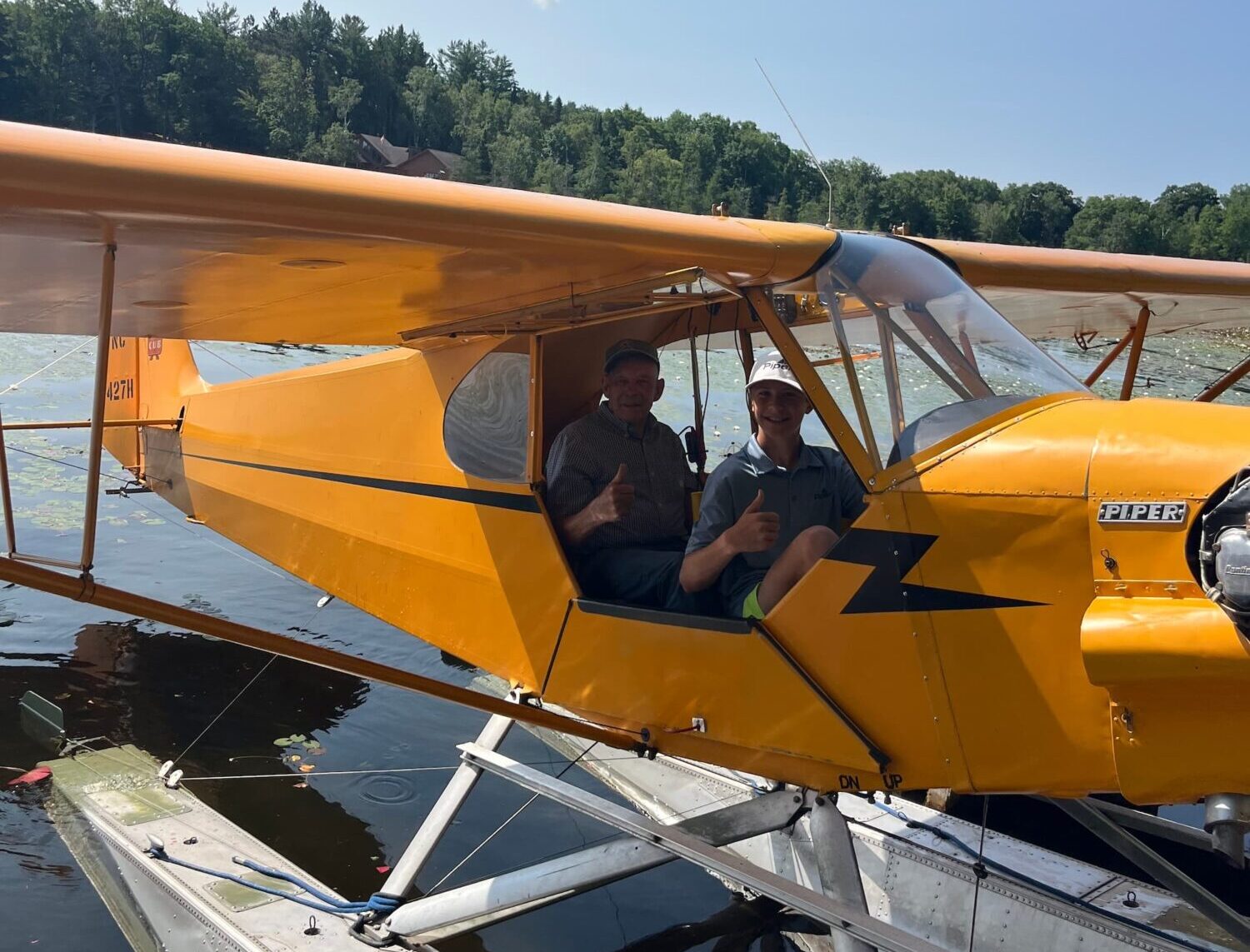
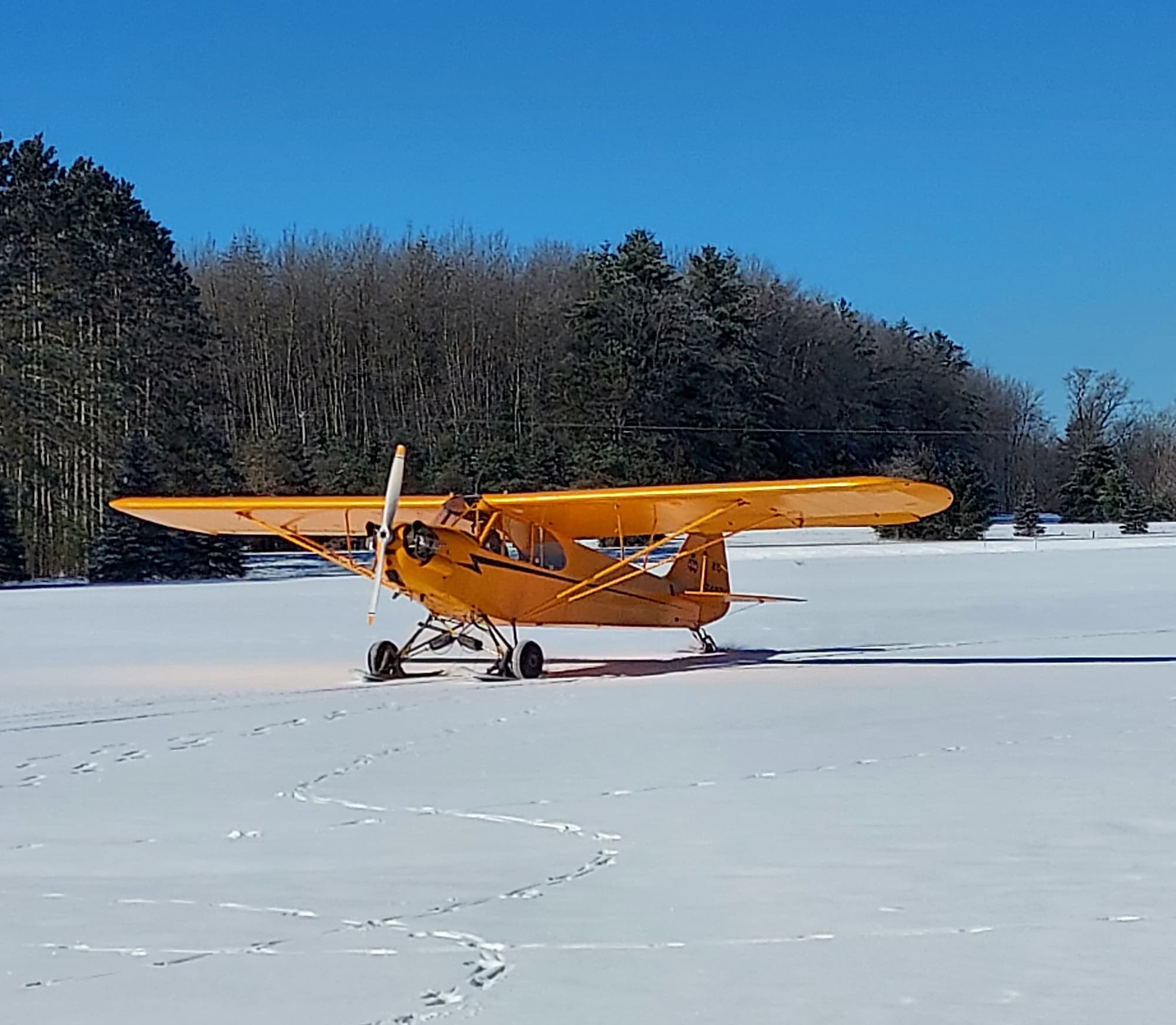
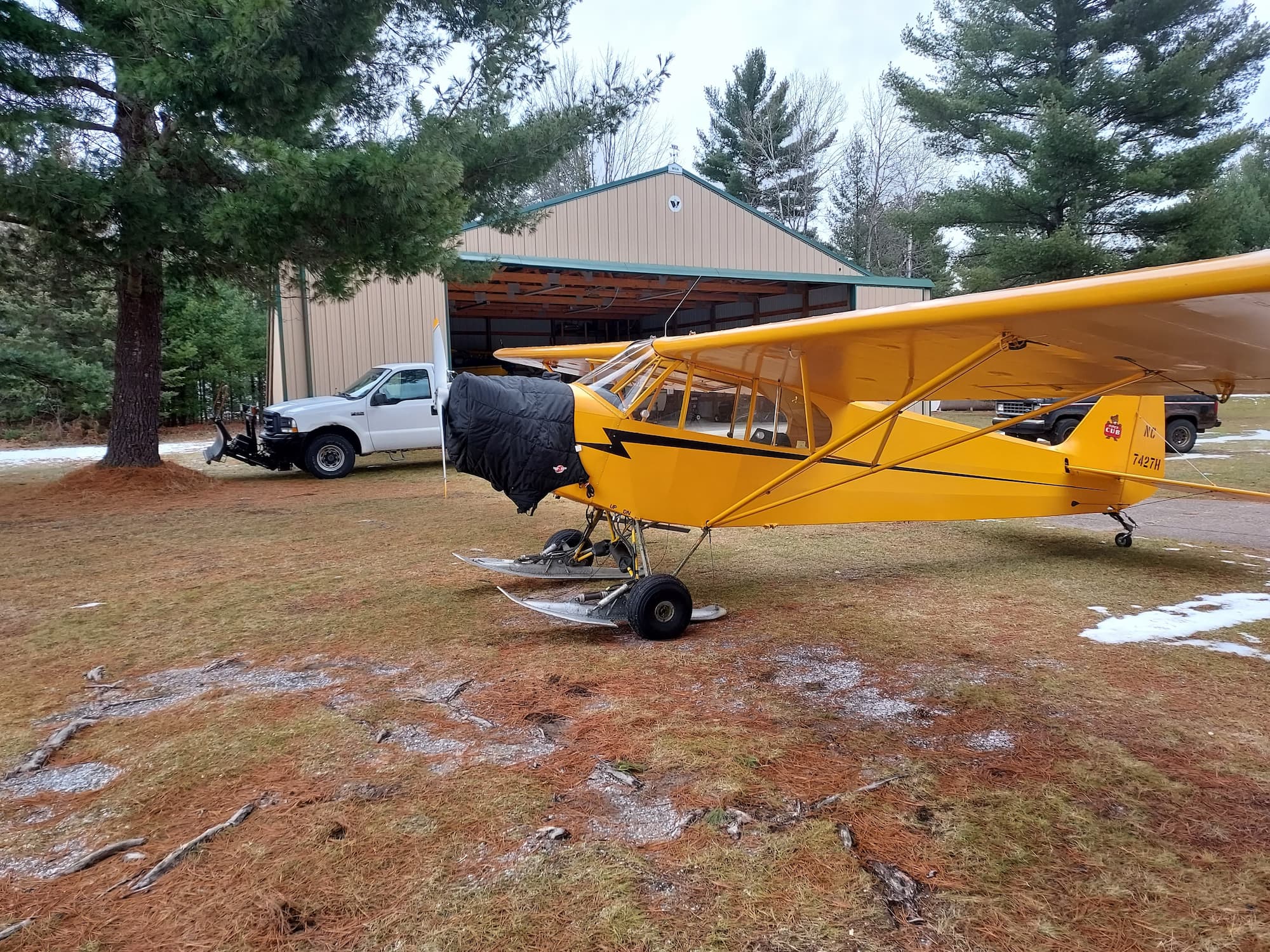
Since then, I’ve been busy training pilots on floats, wheels and skis. I even got a set of fancy Federal AWB1500 hydraulic skis for winter flying, so I can land on both snow and plowed runways.
Derek, Don’s son, was one of my youngest students. He started logging hours with me when he could just barely reach the pedals. His first solo flight on floats was on his 16th birthday — September 11, 1993. Today, Derek runs Northwoods Aviation, working side by side with Don. As the business grew, they brought in some assistants to help me out: a Cessna 180 floatplane for advanced training and seaplane charter work, a Cessna 170B for pipeline patrol along with a Super Cub and a Husky for seaplane training. This gave me a much-needed break to stay on wheels and relax in the hangar.
I’ll admit, I got a little nervous when Don started spending more time in his Cessna 180 floatplane. But deep down, I know nothing beats a classic Piper J-3 Cub! Sure, that 170B has a Lycoming O-360, but I can get off the ground in half the space with half the horsepower. True, I’m a bit slower, but life isn’t about speed — it’s about the journey. And I figure Don will be back once he’s done playing with the big toys and is ready to settle down with a Sport Pilot License.
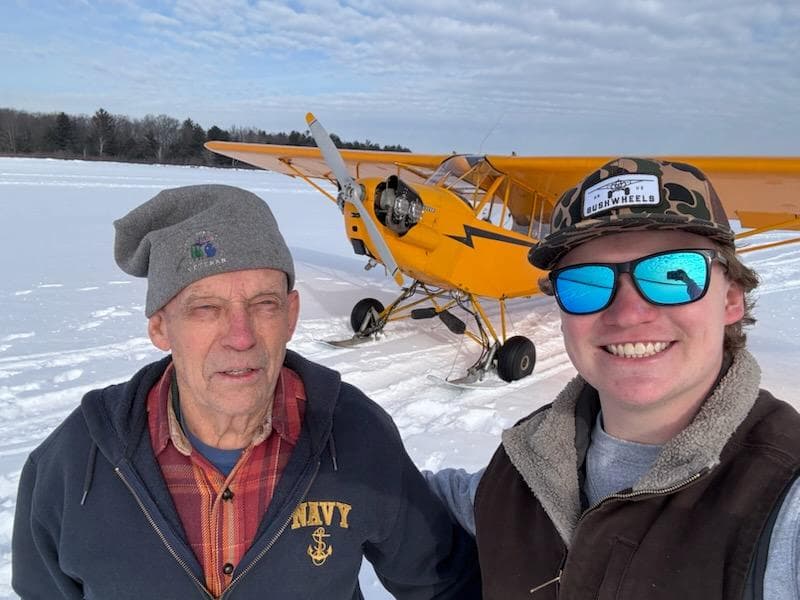
In 2011, I turned 65 and thought it might be time to sign up for Social Security, living out my days watching the sunset over the lake. But Don had other plans for me. He decided new pilots still needed to learn how to fly on conventional gear and navigate by looking at the sky, not a screen. So, I stayed busy — sometimes getting a little banged up — teaching the next generation how to fly.
And wouldn’t you know it, two of Don’s grandkids took an interest in flying. Naturally, he volunteered me to help them learn! Kyle and Maria both soloed on floats with me on their 16th birthdays: Kyle in August 2020 and Maria in August 2023. I could feel their nerves on takeoff, but we made it. As we circled over Missaukee Lake, I could see their families watching below, full of excitement and pride. Their landings were flawless; after all, I’ve been doing this for nearly 80 years.
These days, I split my time between summers on the lake and winters playing in the snow with my trusty skis. Don and I are officially retired now, and he’s sold off most of his other planes. But let’s be honest — nothing quite compares to the smooth handling of a CLASSIC Piper J-3 Cub!
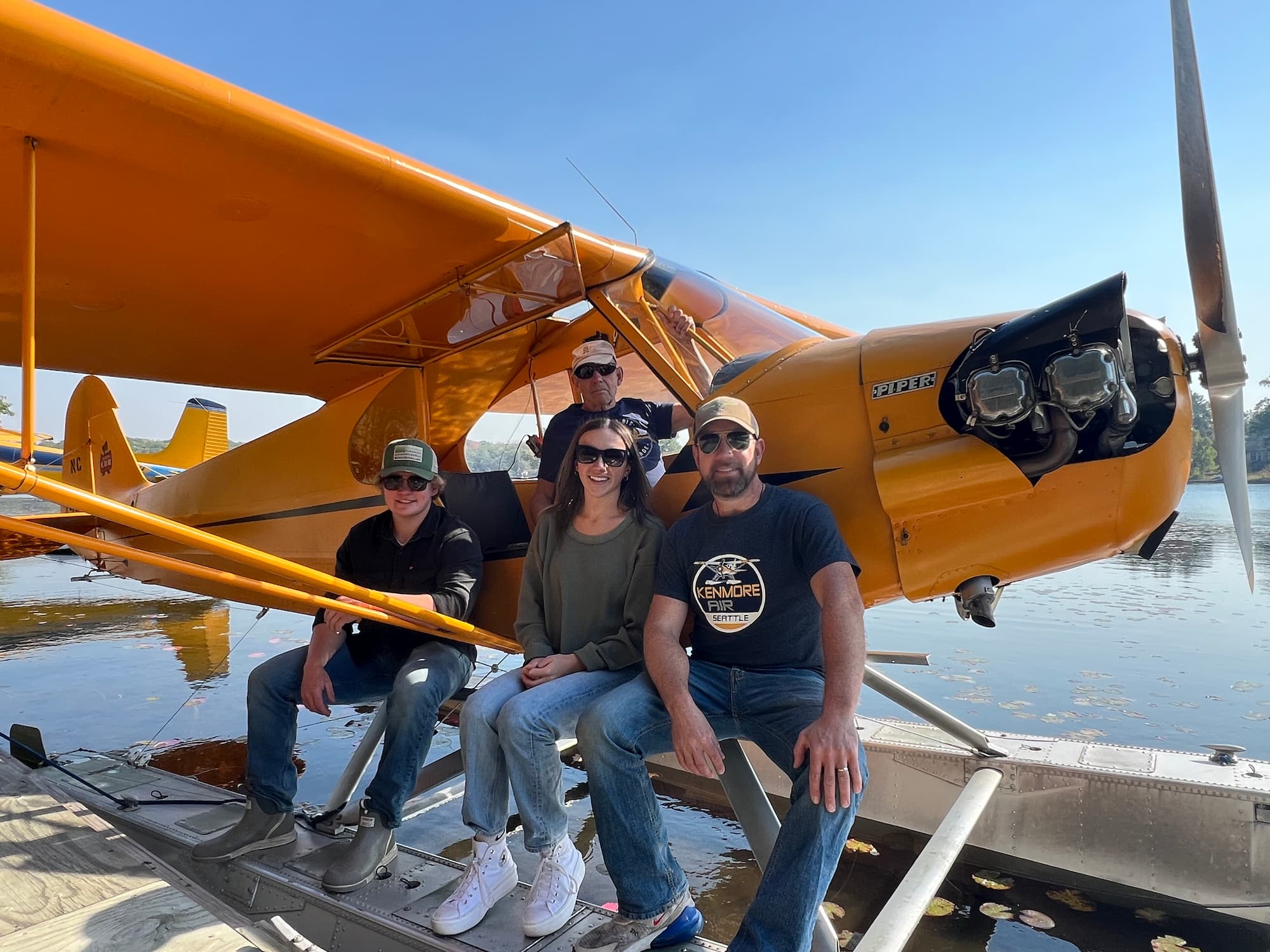
Don DeRuiter first wrote this story in 1993 for the Northwoods Aviation quarterly newsletter. He updated it in 2021, and his daughter Lisa edited it in 2024.
NC7427H isn’t the only Piper with a story attached. Read more from the Piper community.